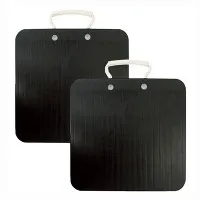
Compared to other materials, wooden leg pads may have the following drawbacks:
1. Poor durability: Wooden leg pads may be affected by moisture, corrosion, and insect infestation after prolonged use, resulting in poor durability.
2. Vulnerable to damage: Wooden leg pads are relatively fragile and susceptible to impact, breakage, or rupture, especially under heavy loads or harsh environments.
3. Poor anti slip performance: The wooden leg pads have relatively poor anti slip performance and are easily affected by slippery ground or rainwater, which may lead to the risk of sliding of cranes or pump trucks during use.
4. Not suitable for damp environments: Wooden leg pads are sensitive to damp environments and are prone to water absorption, expansion, or deformation, making them unsuitable for use on perennial wet floors.
Overall, the durability, wear resistance, and slip resistance of wooden leg pads are relatively poor, and their application range is relatively narrow. When selecting materials, it is necessary to comprehensively consider factors such as environmental bearing capacity and durability. Ultra high molecular weight polyethylene leg pads can be selected, which have strong weather resistance, high bearing capacity, anti slip, wear resistance, and corrosion resistance.